
Technology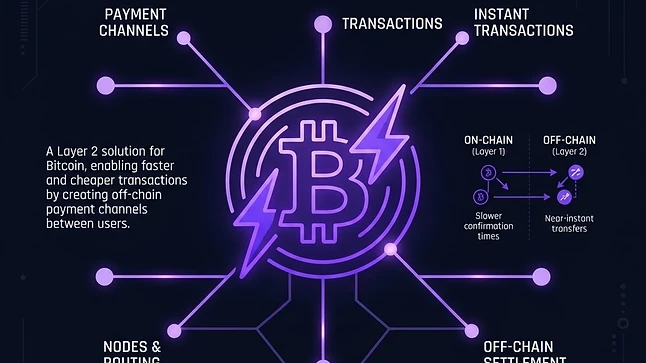
The Bitcoin Lightning Network: Scaling the Future of Digital Payments The Bitcoin Lightning Network stands as one of the most significant technical advancements in the history of cryptocurrency. As a secondary "layer-two" scaling protocol, it addresses the fundamental constraints of the Bitcoin main chain, transforming Bitcoin from a store-of-value asset into a viable, high-speed medium for global commerce. By offloading the bulk of transaction processing away from the main ledger, the Lightning Network provides the throughput necessary to support everything from micro-payments to daily retail transactions, all while maintaining the decentralized and trustless integrity that defines Bitcoin.
Bitcoin Lightning Network: How Instant Payments Work
Fino Team 8 min readOct 14, 2026
Discover how the Bitcoin Lightning Network enables instant, low-cost global transactions. Learn how this layer-2 scaling solution solves Bitcoin's speed issues.
The Bitcoin Lightning Network: Scaling the Future of Digital Payments The Bitcoin Lightning Network stands as one of the most significant technical advancements in the history of cryptocurrency. As a secondary "layer-two" scaling protocol, it addresses the fundamental constraints of the Bitcoin main chain, transforming Bitcoin from a store-of-value asset into a viable, high-speed medium for global commerce. By offloading the bulk of transaction processing away from the main ledger, the Lightning Network provides the throughput necessary to support everything from micro-payments to daily retail transactions, all while maintaining the decentralized and trustless integrity that defines Bitcoin. 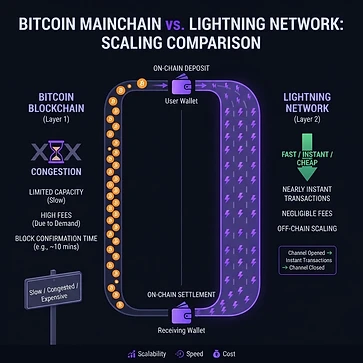 ## The Scaling Challenge Facing Bitcoin Bitcoin, while revolutionary, was intentionally designed with strict block size limits to ensure network security and decentralization. This design choice resulted in a capacity of roughly seven transactions per second (TPS). When user demand surges, the network becomes congested, leading to extended confirmation times and soaring transaction fees. For Bitcoin to function as a global currency, it needed a method to process thousands of transactions per second without bloating the main blockchain. The Lightning Network emerged as the definitive solution to this challenge, creating a secondary environment where transactions can occur rapidly without requiring an on-chain broadcast for every individual payment. ## How the Lightning Network Functions The core innovation of the Lightning Network is the implementation of bidirectional payment channels. These channels essentially act as private, temporary ledgers shared between two participants. By utilizing smart contracts, the network allows for an indefinite number of transactions to occur instantly between parties without immediate interaction with the underlying Bitcoin blockchain.
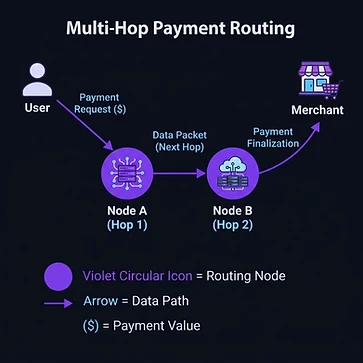
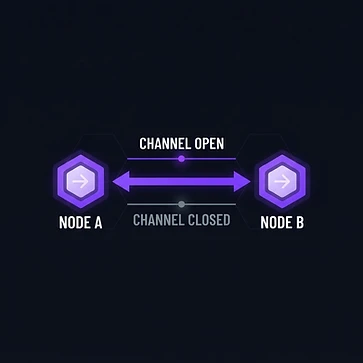 ### Creating a Payment Channel To open a channel, two parties create a multi-signature address on the Bitcoin mainnet. They contribute an initial amount of capital to this address, which acts as a collateral deposit. Once established, this channel becomes a dedicated gateway for funds to travel between the participants. The channel does not record individual movements on the blockchain; instead, it uses cryptographic updates to modify the distribution of the initial balance. ### The Routing Mechanism The real magic of the Lightning Network lies in its routing capabilities. A user does not need to open a direct channel with every merchant they interact with. Through multi-hop payment routing, the network calculates an efficient path across connected nodes to relay the funds to the final destination. This "mesh network" approach allows a small number of channels to connect thousands of users, creating a global payment web that functions similarly to the internet's routing of data packets. ### A Practical Example: The Coffee Shop Scenario Imagine Alice wants to purchase a coffee from Bob’s cafe. Alice and Bob open a payment channel with a shared capacity of 0.1 BTC. Alice sends 0.0005 BTC to Bob for the coffee. Instead of waiting for a 10-minute block confirmation, the transaction completes in milliseconds. The internal balance shifts: Bob now holds 0.0005 BTC, and Alice holds 0.0995 BTC. These updates continue as long as the channel remains open, and the only time a transaction fee is paid to the main Bitcoin blockchain is when they finally decide to close the channel and settle the final net balance.
 ## Why Speed Matters for Adoption The primary barrier to Bitcoin mass adoption has always been its impracticality for small purchases. Paying a $5 fee to buy a $2 item is economically irrational. The Lightning Network eliminates this friction by reducing transaction fees to nearly zero. This enables a new "micropayment economy," where users can pay for streaming content by the second, news articles by the paragraph, or API access by the call. These granular payments were previously impossible on the main chain but are now a core feature of the Lightning ecosystem. ## Security and Trustless Design Critics often question whether moving funds off-chain increases risk. The Lightning Network is designed with robust security features that ensure users retain full custody of their assets. Because every channel is anchored to the main blockchain, participants cannot spend more than they have deposited. If a counterparty attempts to broadcast an outdated balance to defraud the user, the network's "penalty mechanism" allows the victim to automatically claim the entirety of the channel's funds. This creates a powerful economic incentive for honesty, keeping the network secure without reliance on trusted intermediaries.
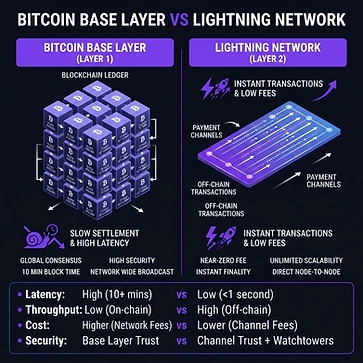 ## Key Takeaways * Lightning is a layer-2 protocol built on top of Bitcoin to solve scalability. * It uses bidirectional payment channels to enable near-instant settlements. * Multi-hop routing allows users to pay any merchant in the network. * Main chain settlement only occurs when channels are closed, saving on fees. * It enables micropayments, effectively reducing energy consumption per transaction. * Security is maintained via smart contracts anchored to the Bitcoin blockchain. ## FAQ ### Is the Lightning Network truly anonymous? While Lightning offers superior privacy compared to the main Bitcoin blockchain—since individual payments aren't public—it is not perfectly anonymous. Advanced network analysis can sometimes link channel routes. For enhanced privacy, users often utilize tools like Tor or submarine swaps to obfuscate their payment history. ### Can I lose funds on Lightning? You must be responsible for your node or wallet state. If you lose your channel state data, you risk losing access to the funds within that channel. Consequently, users should use well-maintained, managed wallets like Phoenix or Breez, or maintain regular backups if running a professional-grade node. ### How do I get started? To start using the Lightning Network, download a user-friendly Lightning-compatible wallet such as Phoenix, Breez, or Zeus. Fund your wallet with a small amount of Bitcoin, wait for the transaction to confirm on-chain, and you will be ready to open your first channel or scan a Lightning invoice to begin making instant payments.


Comments (0)
Be the first to comment.