
Crypto Tax Basics: How to Track Gains and Cost Basis

Learn the essentials of Crypto Tax Basics. Understand how to accurately track your capital gains, calculate cost basis, and stay compliant with your filings.
Navigating the world of digital assets requires more than just mastering trading strategies; it demands a clear understanding of Crypto Tax Basics. As tax authorities globally increase their scrutiny of decentralized finance, tracking your gains and determining your cost basis has become a critical responsibility for every investor. Whether you are holding Bitcoin, staking Ethereum, or yield farming, the IRS and other tax agencies treat crypto as property, meaning every trade is a taxable event. This guide will walk you through the mechanisms of reporting your crypto activities effectively.
Understanding the Taxable Nature of Crypto
For tax purposes, most jurisdictions classify cryptocurrency as property rather than currency. This means that every time you dispose of a crypto asset—whether by selling it for fiat, trading it for another coin, or using it to purchase goods—you trigger a taxable event. You are responsible for calculating the difference between the fair market value at the time of disposal and your original acquisition cost.

Determining Your Cost Basis
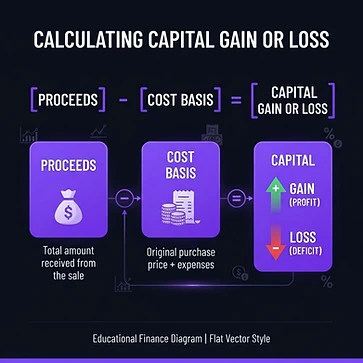
Your cost basis is essentially the total amount you spent to acquire an asset, including transaction fees and commissions. If you bought 0.5 BTC for $10,000 and paid a $50 exchange fee, your cost basis is $10,050. When you eventually sell that asset, this basis is subtracted from your proceeds to determine your capital gain or loss.
Methods for Calculating Cost Basis
Calculating your cost basis can be complicated, especially if you have accumulated assets over time through multiple purchases at different prices. Most tax authorities allow or mandate specific accounting methods:
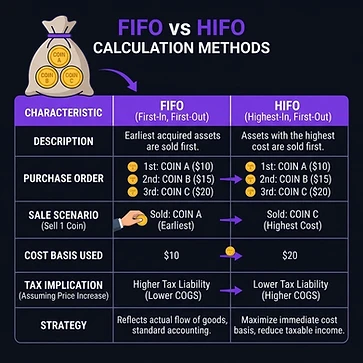
- FIFO (First-In, First-Out): The assets purchased first are considered sold first.
- LIFO (Last-In, First-Out): The assets most recently purchased are considered sold first.
- HIFO (Highest-In, First-Out): The assets with the highest cost basis are sold first, which generally minimizes tax liability.
- Specific Identification: You choose exactly which specific units (by transaction ID) you are selling.

A Worked Example of Capital Gains
Let us assume you purchased 1 ETH for $2,000 in January. In June, you purchased another 1 ETH for $3,000. In December, you sold 1 ETH for $4,000. Under FIFO rules, you sold the first ETH purchased. Your gain is calculated as: $4,000 (Proceeds) - $2,000 (Basis) = $2,000 in capital gains. If you used HIFO, you would sell the June ETH, resulting in: $4,000 - $3,000 = $1,000 in capital gains.
Staying Compliant with Record Keeping
To avoid complications with the tax office, maintaining a meticulous audit trail is essential. You should export your transaction history from every exchange and wallet used during the tax year. Ensure your records include the date of the transaction, the amount, the asset type, and the fair market value in your local currency at that moment.

Navigating Complex Transactions
Beyond simple buy-and-sell orders, modern crypto investors participate in complex activities. Staking rewards, for instance, are generally considered taxable income at the time of receipt. Airdrops and hard forks also present unique reporting requirements. Always check with a specialized tax professional to ensure you are reporting these correctly according to local laws.
Tools for Crypto Tax Management
Manually tracking these details in a spreadsheet is possible for simple portfolios, but as activity increases, automation is recommended. Crypto-specific tax software can sync with your wallets via API or public keys to calculate gains, losses, and income automatically, significantly reducing the risk of errors.


Key Takeaways
- Crypto is classified as property, meaning every sale or trade is a taxable event.
- Cost basis is the acquisition price plus associated fees.
- Choosing an accounting method like FIFO or HIFO significantly impacts your tax bill.
- Staking rewards and airdrops are considered income, not just capital gains.
- Consistent record-keeping and using automated tax software prevent audit issues.
FAQ
Is moving crypto between my own wallets a taxable event?
Generally, no. Moving assets between wallets you own and control is not a disposal of the asset and does not trigger a taxable event. However, you must document these transfers to ensure your cost basis calculations remain accurate for future sales.
How are crypto-to-crypto trades taxed?
Crypto-to-crypto trades are treated as a sale of one asset to purchase another. You must report the capital gain or loss on the asset being sold based on its value at the time of the swap.
What happens if I lose money on my crypto investments?
Capital losses can be used to offset capital gains. If your losses exceed your gains, you may be able to use the excess to offset a portion of your ordinary income, depending on your jurisdiction's specific tax code.
Comments (0)
Be the first to comment.