
Real-World Asset Tokenization: How RWAs Work
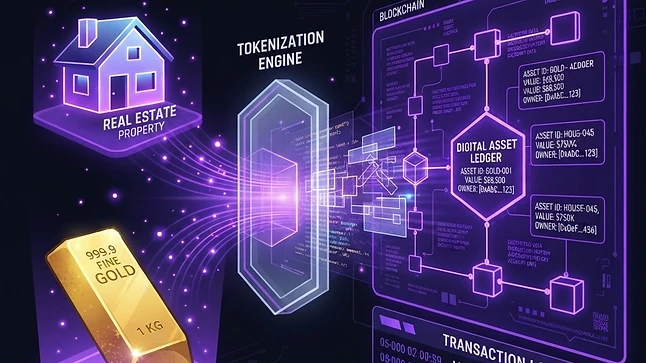
Discover how real-world asset tokenization bridges traditional finance and blockchain. Learn how RWAs work, their benefits, and the future of digital ownership.
Introduction to Real-World Asset Tokenization
Real-world asset (RWA) tokenization is the process of converting physical or financial assets—such as real estate, gold, bonds, or fine art—into digital tokens on a blockchain. At Fino, we define RWA tokenization as the bridge between legacy financial systems and the decentralized future. By representing ownership rights through programmable tokens, we can increase liquidity, transparency, and accessibility for assets that were once difficult to trade. Understanding how RWAs work is essential for navigating the next phase of the digital economy.
The Mechanics of RWA Tokenization
At its core, tokenization involves creating a digital twin of an asset. This process relies on smart contracts to automate the legal and financial parameters of asset ownership. When you purchase an RWA token, you are essentially holding a cryptographically secured share of the underlying asset.
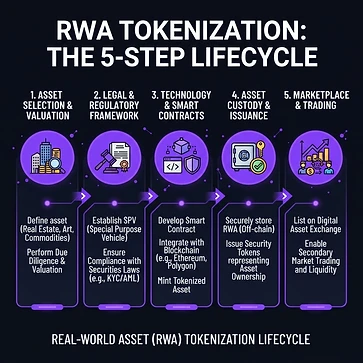
The Step-by-Step Lifecycle
- Asset Selection: A tangible or financial asset is appraised and verified.
- Legal Structuring: A special purpose vehicle (SPV) or legal framework is established to represent the asset on-chain.
- Smart Contract Deployment: Code is written to handle ownership, dividends, or voting rights.
- Token Issuance: Tokens are minted and distributed to investors via a platform.
- Redemption/Secondary Trading: Investors can hold, stake, or trade their tokens on secondary markets.
Worked Example: Tokenized Real Estate
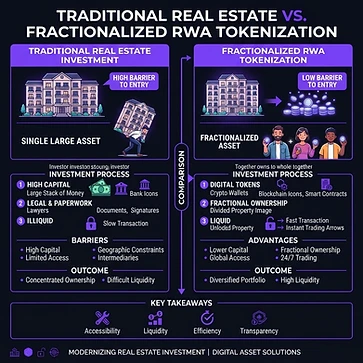
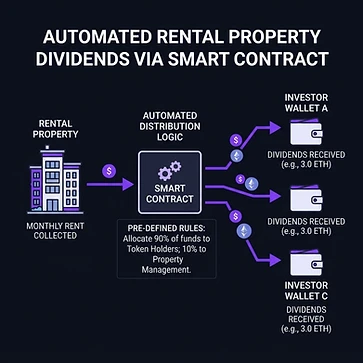
Imagine a luxury apartment building valued at $10 million. Traditionally, buying a stake requires millions in capital. Through tokenization, the owner splits the property into 100,000 tokens priced at $100 each. Investors from around the world can buy a fraction of the building. Smart contracts automatically distribute monthly rental income as stablecoins to every token holder's wallet, proportional to their stake.
Benefits of Tokenizing Real-World Assets
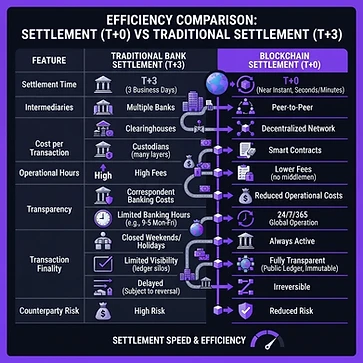
Tokenization offers significant advantages over traditional asset management, including fractional ownership, 24/7 liquidity, and lower barrier to entry for smaller investors.

Increased Liquidity
Assets like commercial real estate or fine art are historically illiquid. Tokenization allows these assets to be traded globally on decentralized exchanges, drastically reducing transaction times.
Transparency and Programmability
Blockchain ledger systems ensure every transaction is publicly verifiable. Furthermore, programmable money means dividends can be distributed instantly without intermediaries.
Challenges and Regulatory Hurdles
Despite the potential, integrating legacy legal systems with blockchain technology is complex. Jurisdictional differences and the need for standardized oracle data present ongoing challenges for widespread adoption.

The Future of Tokenized Finance
As institutional interest grows, we expect to see more government bonds and carbon credits being tokenized. The convergence of DeFi and traditional markets is inevitable as infrastructure matures.

Key Takeaways
- RWA tokenization creates digital representations of physical assets.
- Smart contracts manage the lifecycle of the asset, including ownership and dividends.
- Fractionalization allows for smaller, more diverse portfolios.
- Transparency and speed are primary advantages of RWA platforms.
- Regulatory compliance remains the most significant hurdle for mass adoption.
FAQ
How is the value of an RWA token determined?
The value is derived from the underlying asset. Oracles and independent audits ensure the token price remains pegged to the asset's real-world market valuation.
Are RWA tokens considered securities?
In most jurisdictions, yes. RWA tokens representing ownership in profit-generating assets are typically classified as securities and must comply with SEC or local equivalent regulations.
Can I trade RWA tokens anytime?
Yes, unlike traditional markets that have opening and closing hours, tokenized assets on a blockchain can be traded 24/7 on compatible secondary markets.
Comments (0)
Be the first to comment.