
Crypto Funding Rates: Reading Perpetual Futures Sentiment
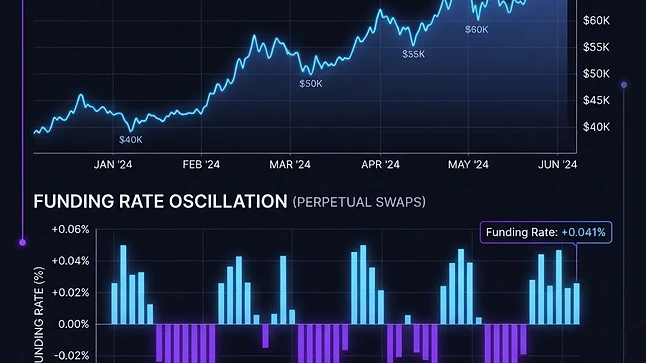
Learn how crypto funding rates reveal market sentiment in perpetual futures. Master this Fino guide to understand how traders gauge bullish or bearish trends.
Introduction to Crypto Funding Rates
In the fast-paced world of digital assets, understanding market sentiment is paramount for any trader. One of the most reliable tools in a professional toolkit is the study of Crypto Funding Rates within perpetual futures contracts. Unlike traditional futures that have an expiry date, perpetual contracts can be held indefinitely. To ensure these contracts trade close to the underlying spot price, exchanges implement a mechanism known as the Funding Rate. By tracking these rates, you can interpret whether the market is overly optimistic or fearful. At Fino, we believe that understanding these periodic payments is the key to mastering market psychology and positioning yourself ahead of the herd.
Understanding Perpetual Futures Basics
Perpetual futures are synthetic derivatives that mirror the price of a spot asset, such as Bitcoin or Ethereum. Because there is no settlement date, the price of a perpetual contract could theoretically diverge significantly from the spot price. To solve this, exchanges use the Funding Rate mechanism to incentivize traders to keep the contract price in line with the index price.
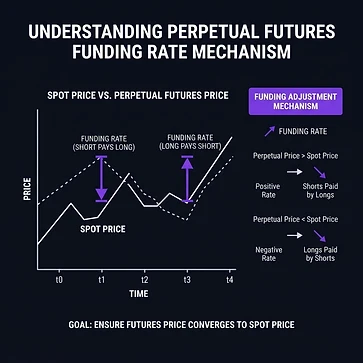
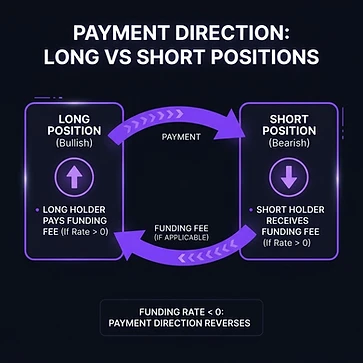
When the funding rate is positive, it means the price of the perpetual contract is higher than the spot price. Consequently, long position holders must pay a fee to short position holders. Conversely, when the rate is negative, the contract is trading at a discount to the spot price, and short position holders pay long position holders.
How Funding Rates Indicate Sentiment
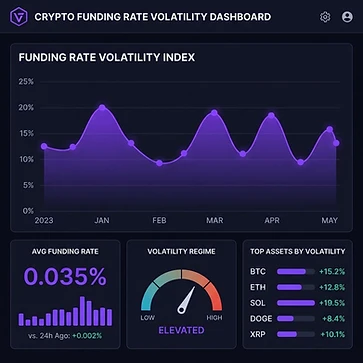
Funding rates act as a real-time pulse of trader leverage. A consistently high positive funding rate suggests that the majority of traders are aggressively betting on price increases, often using high leverage. This represents an overheated market that may be prone to a 'long squeeze.'
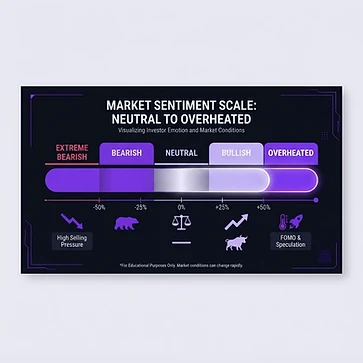

On the other hand, a deeply negative funding rate suggests extreme pessimism. While this can signal a bottom during intense sell-offs, it also highlights that the market is fearful and expecting further downside, which can sometimes lead to a 'short squeeze' if the price holds firm.
Analyzing the Funding Rate Cycle
Market cycles often correlate with shifts in funding trends. In a bull market, you will frequently observe positive funding rates that sustain for weeks. However, when funding rates reach abnormal peaks, it often acts as a contrarian indicator, signaling that the rally might be nearing a local top. Traders should watch for sudden spikes in funding as a signal to reduce risk.
Worked Example
Imagine Bitcoin is trading at $50,000 on the spot market. On a crypto exchange, the perpetual futures price is $50,100. Because the futures price is higher, the funding rate becomes positive. If you hold a 1 BTC long position, you will pay a small fee to those who are shorting. This creates a cost of carry for long traders, effectively cooling down the bullish momentum.

Strategies for Traders
Smart traders use these rates to time their entries and exits. The 'Funding Arbitrage' strategy, for instance, involves longing the spot asset while simultaneously shorting the perpetual future. By collecting the funding payment, the trader captures a delta-neutral yield without being exposed to price volatility. This strategy thrives during high-interest periods.
Risks of Relying on Funding Data
While powerful, funding rates are not a crystal ball. Sudden market movements—often triggered by macro news or liquidation cascades—can override sentiment signals. Always combine funding analysis with technical analysis and volume data to ensure a holistic view of the market state.

Key Takeaways
- Positive funding rates indicate a bullish market; negative rates indicate bearish sentiment.
- Funding rates incentivize traders to align futures prices with spot prices.
- High funding spikes often signal potential short-term reversals or over-leverage.
- Funding arbitrage allows for yield generation through delta-neutral positions.
FAQ
Why do funding rates change?
Funding rates change based on the difference between the perpetual contract price and the spot index price, as well as the interest rate differential between the two currencies involved in the pair.
Can funding rates be zero?
Yes, if the perpetual contract trades exactly at the index price, the funding rate may be zero or negligible, indicating a neutral market sentiment.
How often are funding payments made?
Most exchanges calculate and settle funding payments every 8 hours, although some platforms have moved to hourly settlements to ensure tighter tracking of the spot price.
Comments (0)
Be the first to comment.