
Bitcoin ETFs: How Spot ETFs Affect the Market

Discover how Bitcoin ETFs work and learn how Spot ETFs affect the crypto market. Understand the impact of institutional capital on digital asset prices today.
Introduction to Bitcoin ETFs
The financial landscape witnessed a seismic shift with the approval of Bitcoin ETFs. For investors on Fino, understanding how Bitcoin ETFs influence market dynamics is essential. A Spot Bitcoin ETF allows investors to gain exposure to the price of Bitcoin without the need to hold the asset directly. By integrating crypto into traditional brokerage accounts, these products act as a bridge between institutional capital and the digital asset ecosystem. This article explores how these instruments affect market liquidity, volatility, and the broader maturation of the asset class.
How a Spot Bitcoin ETF Works
Unlike futures-based ETFs, which hold derivatives, a Spot Bitcoin ETF holds the actual underlying asset. When an investor buys shares of a Spot ETF, the issuer must purchase an equivalent amount of Bitcoin. This creates a direct link between retail demand in the stock market and supply on cryptocurrency exchanges.
The Mechanism of Creation and Redemption
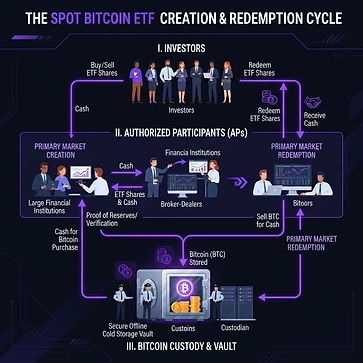
The creation and redemption process involves Authorized Participants (APs). When demand for the ETF rises, APs step in to maintain the share price close to the Net Asset Value (NAV).
- APs provide cash to the fund.
- The fund uses that cash to buy actual Bitcoin.
- Bitcoin is held in secure custodial wallets.
- APs receive newly minted shares in exchange.
Market Impact: A Worked Example
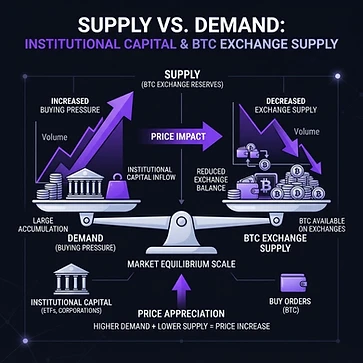
Imagine a large pension fund decides to allocate 1% of its portfolio to Bitcoin via an ETF. The asset manager submits a buy order worth $100 million. Because the ETF must be backed by physical Bitcoin, the fund manager initiates a buy order on institutional crypto exchanges. This sudden surge in buying pressure reduces the circulating supply available on exchanges, often leading to a price appreciation if sell-side liquidity is low.

Institutional Adoption and Liquidity
Institutional adoption is perhaps the most significant byproduct of the ETF approval. By providing a regulated vehicle, ETFs allow pension funds, endowments, and insurance companies to enter the market without navigating complex custody hurdles. This influx of capital has fundamentally altered market liquidity profiles, creating a larger, more stable environment.
Volatility and Price Discovery
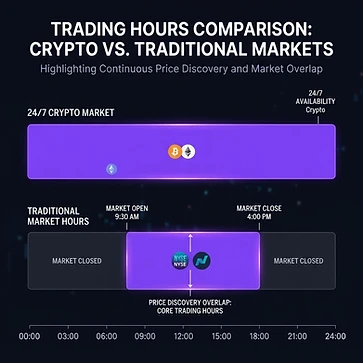
Historically, Bitcoin was viewed as a highly volatile asset driven by retail sentiment. With the introduction of ETFs, price discovery is becoming more aligned with traditional market hours. While crypto markets operate 24/7, the concentration of buying activity during New York Stock Exchange sessions often dictates daily price trends.

The Role of Custody and Security
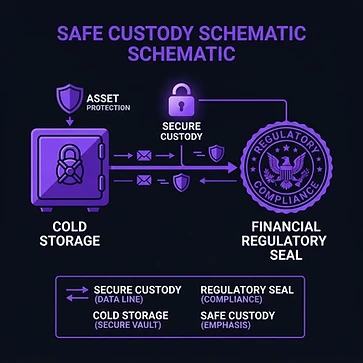
Security remains paramount. The largest ETF issuers rely on institutional-grade custodians to store the underlying Bitcoin in 'cold' or 'deep cold' storage. This separation of the financial product from the technical risk of wallet management makes Bitcoin more accessible to the average investor who might otherwise fear exchange hacks or private key mismanagement.

Key Takeaways
- Spot Bitcoin ETFs provide direct exposure to Bitcoin without requiring self-custody.
- The ETF structure mandates that issuers hold actual Bitcoin, bridging traditional finance and crypto.
- Institutional capital drives price discovery and improves market liquidity.
- ETFs effectively lower the barrier to entry for mainstream financial investors.
FAQ
Do Bitcoin ETFs pay dividends?
No, because Bitcoin is a non-yielding asset, Spot Bitcoin ETFs do not pay dividends. Returns are generated solely through the appreciation of the underlying Bitcoin price.
How are Bitcoin ETFs taxed?
Taxation varies by jurisdiction. In the US, Bitcoin ETFs are generally treated as commodities for tax purposes, meaning gains are subject to capital gains tax rather than income tax rates.
Can I withdraw Bitcoin from my ETF?
Generally, no. Spot Bitcoin ETFs track the price of Bitcoin but do not allow for the physical redemption of the underlying asset into a personal crypto wallet.
Comments (0)
Be the first to comment.