
Airdrop Safety: How to Evaluate a Claim Without Giving Away Your Wallet
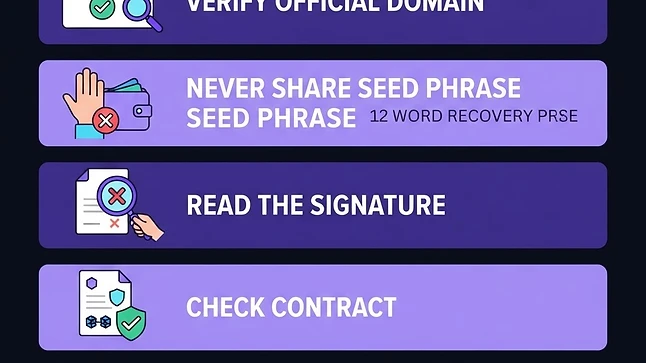
A free-token offer can carry expensive permissions. Use a careful claim checklist and recognize when the safest action is no action.
Receiving a token is not the same as authorizing a claim
Anyone may be able to send tokens to a public address, so an unfamiliar asset appearing in your wallet is not proof that your keys are compromised. The danger often begins when you follow the token's embedded link or sign something on a supposed claim page.
Airdrop campaigns can be legitimate, but urgency, imitation branding and large promised rewards are common phishing tactics. Treat an unsolicited offer as unverified even when it appears in an explorer, wallet notification or a reply beneath a genuine project's post.
Verify the campaign independently
Do not use a direct-message link as your starting point. Navigate through a previously trusted official address and compare the campaign details across independently verified channels. Search-engine placement, paid advertisements and a familiar logo are not proof of authenticity.
Check the exact domain, network and contract references. Compromised official accounts are possible too, so consistent branding is only one signal. If independent confirmation is unavailable, skipping the claim is a rational outcome—not a missed obligation.
Separate experimentation from savings
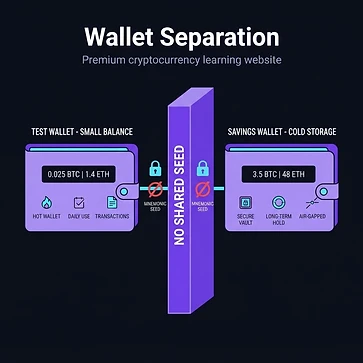

A separate low-value wallet can limit exposure when testing unfamiliar applications. It is not a magic shield: reusing the same compromised seed, connecting the wrong account or moving valuable assets into it can defeat the separation.
Eligibility may depend on a specific historical address, so creating a fresh wallet does not necessarily let you safely claim an allocation intended for another one. Do not move funds or disclose recovery information merely because an alleged support agent says it will unlock a reward.
Inspect what you are asked to sign
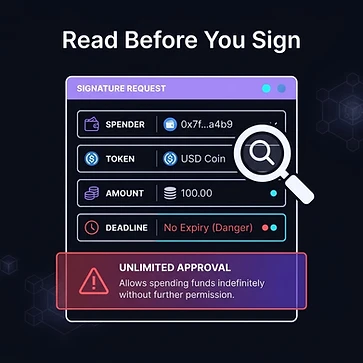

A legitimate claim can require a transaction fee, but a signature advertised as gas-free can still authorize token movement. Watch for broad allowances, collection-wide NFT access, unexpected recipients and unclear permit messages. A transaction simulation can help interpret an action, but it is not a guarantee of safety.
- Never type a recovery phrase into a claim or verification form.
- Reject requests unrelated to receiving the stated allocation.
- Avoid arbitrary software downloads or wallet extensions offered by the campaign.
- Compare expected costs with the reward without assuming its quoted value is realizable.
- Stop when the wallet cannot make the authorization understandable.
If you already interacted
Disconnecting the website stops a connection but does not revoke on-chain allowances. Inspect and revoke unwanted permissions using independently verified tools. If recovery words or private keys were exposed, permission cleanup is insufficient because the attacker may directly control the account.
Keep transaction hashes and relevant details for investigation, but never send secret material to a purported recovery service. No stranger can guarantee reversal of a confirmed blockchain transfer. Acting carefully before signing is much more effective than trying to recover funds after a deceptive claim.
Educational security guidance. Illustrations are AI-generated conceptual artwork.
Comments (0)
Be the first to comment.