
Intent-Based Transactions: From Specifying Every Step to Specifying an Outcome
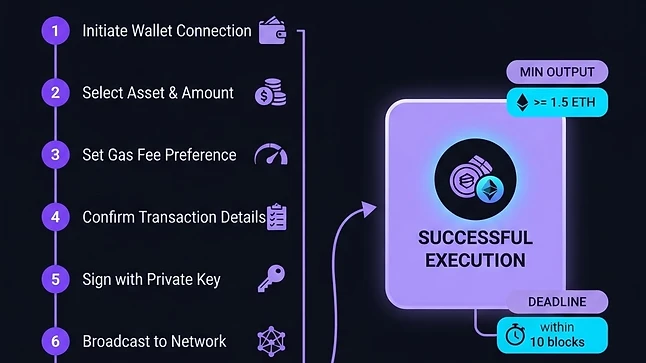
Understand how solvers translate a desired result into execution, and which guarantees still depend on the settlement design.
Instructions versus desired results
A conventional blockchain transaction tells a contract to perform a particular action. An intent-based system instead lets a user express an acceptable outcome and constraints, then delegates some execution choices. For a swap, that might mean receiving at least a specified amount of one token in exchange for another before a deadline.
The distinction is useful but not absolute. Many familiar limit orders already express an outcome constraint. Intent systems extend this idea through different routing, auction, solver or settlement mechanisms. The term describes a family of designs, not one universal protocol.
What a solver contributes
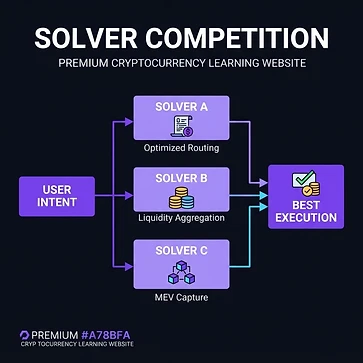
A solver searches for a way to fulfill a user's request. It may use existing exchange liquidity, match compatible orders or supply its own inventory. Multiple solvers may compete, but the benefits depend on entry rules, competition and how the system chooses a winner.
Better routing can improve execution, yet a solver should not receive unlimited authority merely because the interface feels simple. The signed message and settlement contract determine which assets may move and under what conditions.
Define the boundaries of authorization
Consider a hypothetical request to exchange 100 units of token A for at least 49 units of token B before a deadline. A sound implementation must enforce the relevant amounts, recipient, chain and expiration, with protection against unauthorized reuse.
Users should be able to understand whether partial fills are permitted, which fees are included and what happens if execution never occurs. Minimum output does not establish that the price is fair; it only defines the lowest result the user agreed to accept.
Cross-chain execution adds another problem
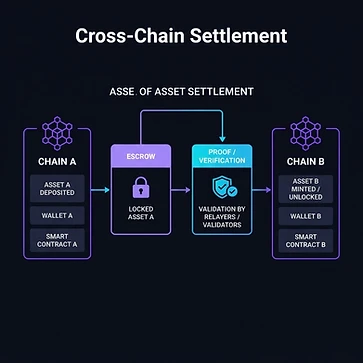

An intent spanning two networks must account for different finality conditions and a way to establish that the destination outcome happened. Depending on the architecture, this can involve bridges, escrow, proofs, relayers or solver inventory. Each introduces its own assumptions and possible delays.
A smooth interface does not make the entire process instant or atomic. Learn when funds become committed, what evidence releases them and which refund path applies after failure. A solver's quick payment is not the same thing as final settlement of every underlying dependency.
Evaluate the system behind the interface
- Who can become a solver, and can one operator censor requests?
- Which contract verifies the outcome and who can upgrade it?
- What limits and deadlines are included in your signature?
- How are fees, failed execution and refunds handled?
- Which cross-chain security assumptions apply?
Intent-based design can reduce user effort and broaden execution choices. Its value is greatest when that simplicity is backed by transparent permissions and verifiable outcomes. If a wallet cannot explain what a signature authorizes, a cleaner interface alone is not a reason to approve it.
Educational technology overview. Illustrations are AI-generated conceptual artwork.
Comments (0)
Be the first to comment.