
When Stablecoins Depeg: A Framework for Assessing Redemption and Liquidity Risk
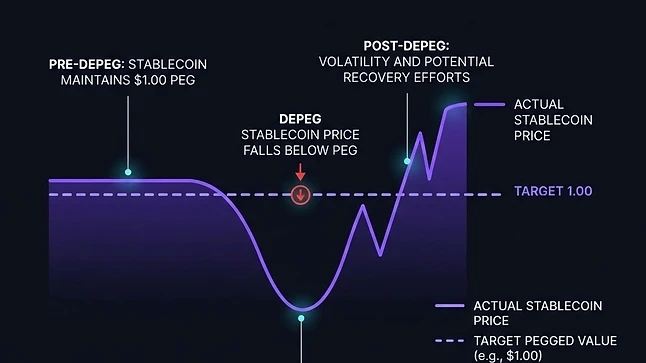
A stable price target is not a guarantee. Separate reserve quality, redemption access, market liquidity and bridge risk.
A peg is a mechanism, not a promise of safety
A stablecoin aims to track a reference value, often a national currency. Its market price depends on the design's backing, redemption process, incentives and the ability of traders to move between the token and its reference asset. Different stablecoins achieve this in very different ways.
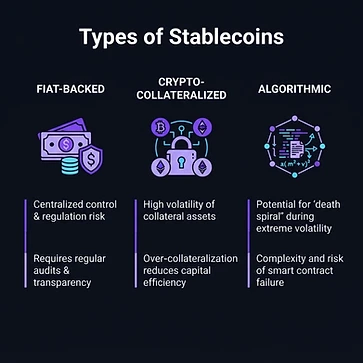
Fiat-backed tokens may rely on an issuer and reserve assets. Crypto-backed designs rely on collateral, risk parameters and liquidation systems. Other mechanisms depend more heavily on algorithmic incentives or related tokens. The label stablecoin does not tell you which risks dominate.
Examine the path from token to underlying value
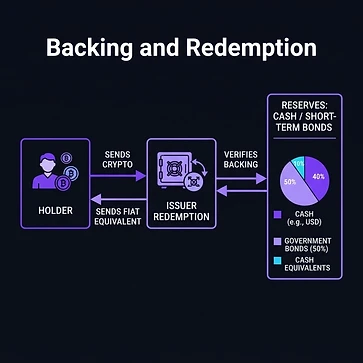
Ask who can redeem directly, whether minimum amounts apply, what verification is required and when settlement is available. Retail holders may only be able to sell on an exchange rather than redeem with the issuer. In stressed conditions, that difference can matter more than a headline reserve figure.
Reserve quality also matters. Cash, short-dated government securities, commercial credit and volatile crypto collateral have different liquidity and loss characteristics. An attestation is not automatically equivalent to a comprehensive financial-statement audit. Review its scope, date and limitations rather than treating a badge as complete assurance.
Why a discount may appear
A temporary market discount can result from trading friction, exchange-specific shortages or delayed access to redemption. A more serious depeg may reflect doubts about backing, legal access to reserves or the viability of the mechanism itself. Price alone cannot establish which explanation is correct.
For an illustrative holding of 1,000 tokens, a market price of $0.97 implies a quoted value of $970 before fees and execution costs. It does not prove that the holder can redeem for $1,000, nor does it establish that recovery to the target is likely.
Liquidity and bridges add separate layers

A deep trading pool can make exits easier during normal conditions but may drain rapidly when everyone wants the same asset. Wrapped or bridged versions can add custody, bridge and technical risks beyond those of the original token. A matching ticker is not evidence of identical redemption rights.
Before holding a token, verify its contract and network through reliable official references. Compare liquidity where you actually intend to trade, not only aggregate volume across unrelated venues.
Use a written risk checklist
- What assets or mechanisms support the target value?
- Who has an enforceable redemption claim, and under what terms?
- Are reserves liquid and reports current enough for your purpose?
- What controls allow freezing, upgrading or restricting transfers?
- How much exposure is shared across the same issuer, bank or bridge?
Diversifying names may not diversify underlying dependencies. Avoid treating a discount as guaranteed arbitrage or an unusually high yield as compensation you fully understand. Stablecoins can be useful payment and settlement tools while still carrying substantial financial, operational and legal risks.
Educational content, not investment or legal advice. Illustrations are AI-generated conceptual artwork.
Comments (0)
Be the first to comment.