
Market Psychology: Controlling Emotions in Trading
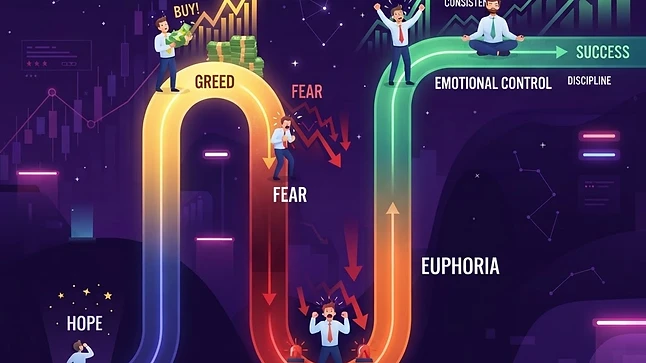
Master the psychological side of trading — recognize emotional biases, use the Fear & Greed Index, and develop the mindset of successful traders.
The crypto market is driven by two powerful emotions: fear and greed. Understanding and controlling these emotions is what separates successful traders from those who lose everything. This guide explores the psychological patterns that dominate crypto markets and how to protect yourself from emotional decision-making.
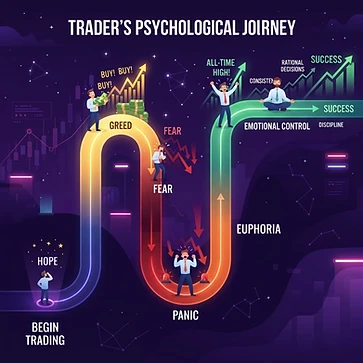
The Emotional Cycle of Trading
Every trader goes through a predictable emotional cycle:
- Optimism — entering a position with hope for gains
- Excitement — early profits validate your thesis
- Euphoria — at the peak, you feel invincible (this is the most dangerous phase)
- Anxiety — the market turns, but you hold on hoping for recovery
- Panic — losses accelerate, fear takes over
- Capitulation — you sell at the bottom, locking in losses
- Despair — you swear off crypto forever (right before the next bull run)
Recognizing where you are in this cycle is the first step to breaking it.
The Fear and Greed Index
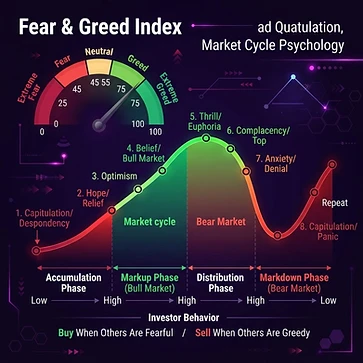

The Fear and Greed Index measures market sentiment on a scale from 0 (extreme fear) to 100 (extreme greed). It analyzes volatility, momentum, social media, surveys, and dominance to gauge the overall emotional state of the market.
How to Use It
- Extreme Fear (0-25): The market is fearful — this is often a buying opportunity
- Fear (25-45): Caution is warranted, but value may exist
- Neutral (45-55): The market is balanced
- Greed (55-75): The market is getting optimistic — be careful
- Extreme Greed (75-100): The market is euphoric — consider taking profits
Warren Buffett's famous advice applies perfectly to crypto: "Be fearful when others are greedy, and greedy when others are fearful."
Common Psychological Biases
Loss Aversion
We feel losses twice as intensely as equivalent gains. This leads to holding losing positions too long (hoping they recover) and selling winning positions too early (to lock in the good feeling).
FOMO (Fear of Missing Out)
Seeing others profit from a rising coin creates irresistible urge to buy at the top. FOMO-driven entries are almost always at the worst possible price.
Confirmation Bias
We seek information that confirms our existing beliefs and ignore contradictory evidence. In a bull market, this means only reading positive news; in a bear market, only negative.
Building Emotional Discipline
- Have a trading plan — define entry, exit, and stop-loss levels before you trade
- Journal your trades — record your emotional state with each decision
- Take breaks — stepping away from the screen reduces impulsive decisions
- Start small — never trade with money you can't afford to lose
- Accept losses — they're a cost of doing business, not a personal failure
The market is a battle between your strategy and your emotions. The traders who succeed are not the smartest — they're the most disciplined. Master your emotions, and you'll be ahead of 90% of market participants.
Comments (0)
Be the first to comment.