
Risk Management Strategies for Crypto Trading
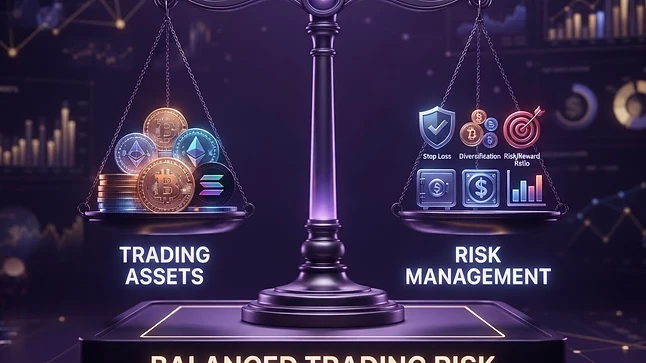
Learn the essential risk management principles every crypto trader needs — position sizing, diversification, and stop-loss strategies.
Risk management is the most critical skill in cryptocurrency trading. The crypto market is notoriously volatile — Bitcoin can swing 10% or more in a single day. Without proper risk management, even the best analysis won't protect you from catastrophic losses. This guide covers the strategies professional traders use to protect their capital.
The 1% Rule
The golden rule of risk management: never risk more than 1-2% of your total portfolio on a single trade. If your portfolio is $10,000, your maximum loss on any trade should be $100-$200. This ensures that even a string of losses won't wipe out your account.
Position Sizing Formula
Position Size = (Account Balance × Risk %) / (Entry Price - Stop Loss Price)
Diversification


Diversification spreads your risk across multiple assets. A well-balanced crypto portfolio might include:
- 40-60% in established coins (BTC, ETH)
- 20-30% in promising altcoins
- 10-20% in high-risk/high-reward positions
- 5-10% in stablecoins for opportunities
Key Diversification Principles:
- Don't correlate — choose assets that don't all move in the same direction
- Rebalance regularly — take profits from winners and redistribute
- Avoid over-diversification — too many positions dilute returns and become hard to manage
Stop-Loss Orders
A stop-loss is an automatic order to sell when the price reaches a predetermined level. It's your safety net against emotional decision-making.
- Hard stop: Set at a specific price level based on technical analysis
- Trailing stop: Moves up as the price rises, locking in profits
- Time stop: Exits the position if it hasn't moved favorably within a set timeframe
The Psychology of Risk
Risk management isn't just about math — it's about discipline. The biggest enemy of a trader is not the market, but their own emotions. Set your rules before you enter a trade and stick to them, no matter what happens.
"The goal isn't to be right. The goal is to make money when you're right and lose little when you're wrong."
Successful trading is about surviving long enough to let your winners run. Risk management is what keeps you in the game.
Comments (0)
Be the first to comment.