
Understanding SIM Swap Attacks
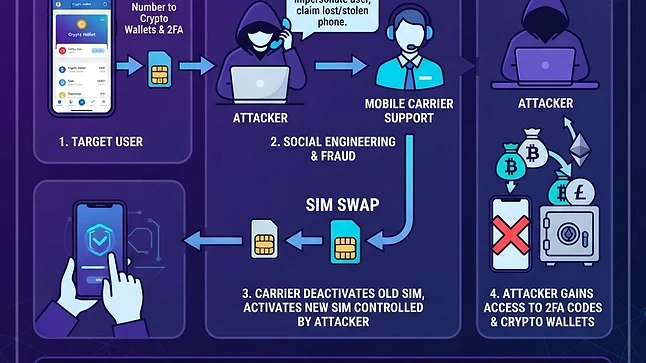
A SIM swap attack lets a criminal take control of your phone number and intercept text messages or calls. For crypto users, this can be especially dangerous because SMS-based security is often used for account recovery and login codes.
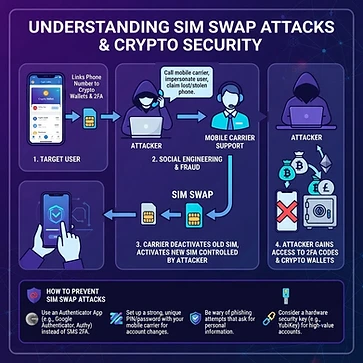
A SIM swap attack happens when a criminal convinces your mobile carrier to move your phone number to a SIM card they control. Once that happens, they may receive your text messages and calls. For crypto users, that can lead to stolen exchange accounts, reset passwords, and bypassed SMS-based two-factor authentication.
Why SIM swaps are dangerous
Many online services use your phone number for:
- SMS login codes
- Password reset links
- Identity verification
- Account recovery
If an attacker controls your number, they may gain access to other accounts very quickly.
How attackers do it
SIM swaps often involve social engineering.
Attackers may:
- Gather personal information from data leaks or social media
- Pretend to be you when contacting your mobile provider
- Trick or pressure support staff into changing your SIM
- Use stolen documents in identity verification attempts
The attack usually targets weak recovery processes rather than advanced technical hacking.
Warning signs of a SIM swap
You may notice:
- Sudden loss of mobile service
- Calls and texts stop working unexpectedly
- Messages about carrier account changes you did not request
- Exchange password reset emails you did not trigger
Treat these signs as urgent.
How to protect yourself
The best defense is reducing your dependence on your phone number.
- Use an authenticator app instead of SMS 2FA where possible
- Add a PIN or port freeze with your mobile carrier
- Use strong, unique passwords for email and exchange accounts
- Protect your email with strong 2FA too
- Share less personal information publicly
Your email account is especially important because many password resets begin there.
What to do if it happens
Act immediately.
- Contact your mobile carrier and report the SIM swap
- Lock your exchange and email accounts
- Change passwords from a safe device
- Remove SMS 2FA and switch to stronger methods if possible
- Check for suspicious withdrawals or login activity
Final takeaway
SIM swaps show that security is not only about wallets. Your phone number, email, and account recovery settings can all become weak points. If you hold crypto on exchanges or use SMS for account security, improving those settings today can significantly reduce your risk tomorrow.
Comments (0)
Be the first to comment.