
Hardware Wallets vs Software Wallets
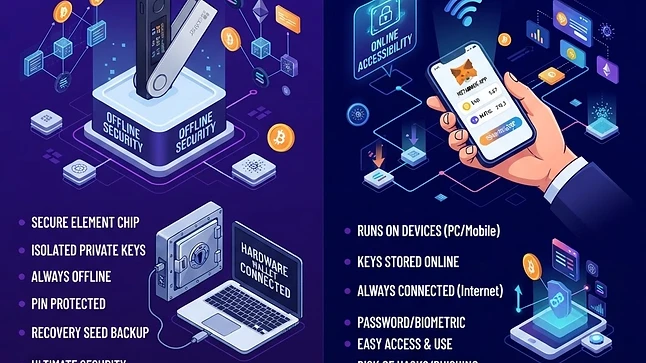
Both hardware and software wallets can be useful, but they serve different needs. This guide explains the trade-offs so beginners can choose the right wallet setup for convenience and security.
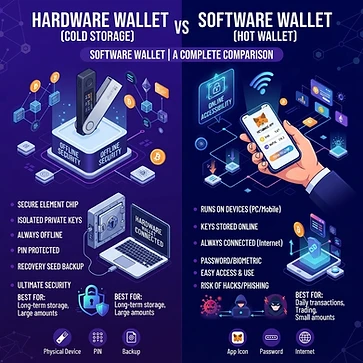
Choosing a crypto wallet is really about balancing security and convenience. Two of the most common options are hardware wallets and software wallets. Neither is automatically perfect; the best choice depends on how you use crypto and how much risk you want to manage.
What is a software wallet?
A software wallet is an app or browser extension on your phone or computer.
Common benefits:
- Quick to set up
- Easy to use for daily transactions
- Often free
- Convenient for DeFi, NFTs, and trading
Common risks:
- More exposed to malware or phishing
- Connected devices can be compromised
- Users may click unsafe links more easily
What is a hardware wallet?
A hardware wallet is a physical device designed to store wallet keys more securely.
Common benefits:
- Private keys stay isolated from your computer or phone
- Stronger protection against many online attacks
- Better choice for long-term storage
Common trade-offs:
- Costs money
- Slightly less convenient for frequent transactions
- Still requires careful setup and seed phrase protection
Which one is safer?
For larger amounts and long-term holdings, a hardware wallet is generally safer. It reduces the chance that malware or a fake website can directly access your private keys.
However, hardware wallets are not magic. If you reveal your seed phrase or approve a malicious transaction, you can still lose funds.
A practical beginner setup
Many users benefit from using both wallet types.
- Hardware wallet: savings or long-term holdings
- Software wallet: smaller amounts for regular activity
- Testing wallet: separate wallet for unfamiliar apps
This layered approach helps limit damage if one wallet is exposed.
Questions to ask before choosing
- How often will I transact?
- Am I storing a small or large amount?
- Do I interact with many DeFi apps?
- Am I comfortable managing a physical device?
- Do I have a safe plan for seed phrase storage?
Simple rule of thumb
If convenience matters most and the amount is small, a software wallet may be enough. If you are holding a meaningful amount of crypto, a hardware wallet is usually worth considering.
The goal is not to pick one “perfect” wallet. It is to create a setup that matches your habits, protects your funds, and makes you less likely to make mistakes under pressure.
Comments (0)
Be the first to comment.