
How to Verify Smart Contracts Before Using Them
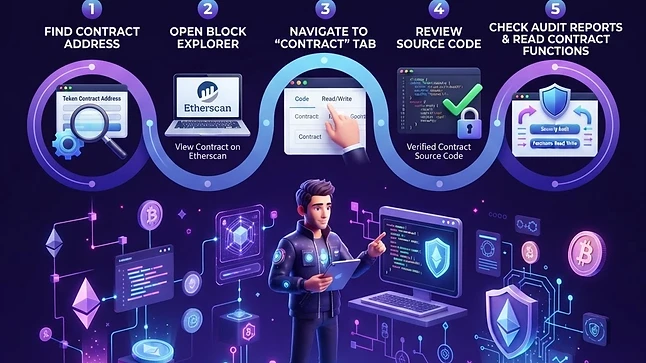
Smart contracts can control your funds, so it’s worth checking them before you interact. This beginner-friendly guide explains simple ways to assess whether a contract looks legitimate or risky.
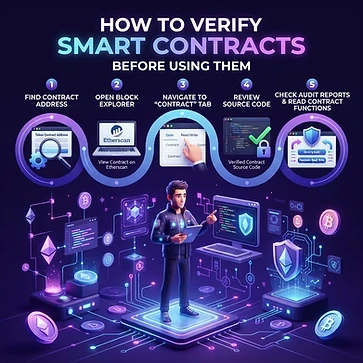
When you use a DeFi app, mint an NFT, or approve a token, you are often interacting with a smart contract. That contract can move assets according to its rules. If the contract is malicious or badly written, your funds may be at risk.
Start with the official source
The safest first step is confirming you have the correct contract address.
- Get the address from the project’s official website or documentation
- Cross-check it with official social accounts
- Avoid addresses posted in random chats or replies
- Watch for lookalike websites and copied branding
A real-looking app with the wrong contract address is still dangerous.
Check block explorer details
Use a block explorer like Etherscan or similar tools on the relevant chain.
Look for:
- Verified source code
- Contract creation date
- Token holders and distribution
- Recent transactions
- Labels or warnings from the explorer
Verified source code does not mean the project is safe, but it is a useful transparency signal.
Review basic trust indicators
Beginners do not need to read every line of code to spot some risks.
Ask these questions:
- Has the project been audited?
- Is the team known or completely anonymous?
- Does the documentation explain contract permissions?
- Is there active community discussion from credible users?
- Are admin controls clearly disclosed?
Understand what you are approving
Many losses happen not when sending funds, but when granting permissions.
Before signing or approving:
- Read the wallet prompt carefully
- Check the token amount being approved
- Be cautious with unlimited approvals
- Use a wallet that shows human-readable transaction details if possible
After using an app, review and revoke approvals you no longer need.
Watch for common contract risks
Even simple users can look for warning signs.
- Hidden minting powers
- Ability to pause transfers unexpectedly
- Owner can blacklist wallets
- Upgradable contracts with broad admin control
- Liquidity that can be removed easily
These are not always bad, but they should be understood before use.
A beginner-friendly checklist
Before interacting with a contract:
- Confirm the address from official sources
- Check for verified code on a block explorer
- Look for audits and security discussions
- Start with a small amount
- Review permissions before approving
You do not need to be a developer to be cautious. Smart contract verification is really about reducing unknowns. The more you confirm before connecting your wallet, the lower your chances of making an expensive mistake.
Comments (0)
Be the first to comment.