
Common Crypto Scams and How to Avoid Them
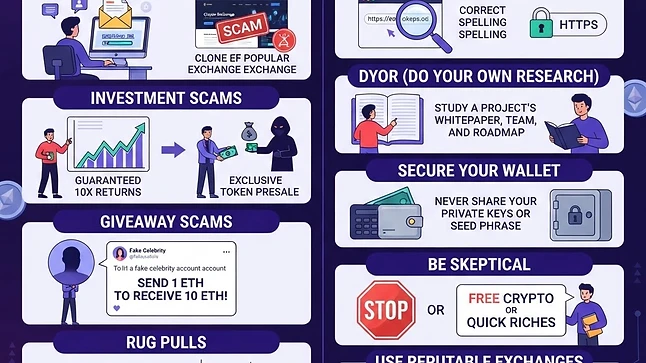
Crypto scams often rely on urgency, fake trust, and unrealistic promises. By learning the most common scam patterns, beginners can avoid expensive and stressful mistakes.
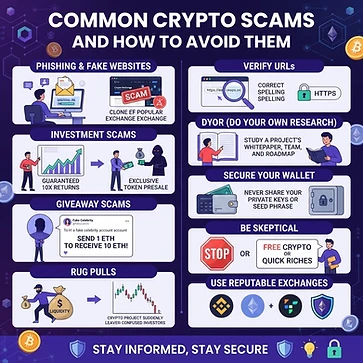
Crypto scams change constantly, but most use the same basic tactics: pressure, confusion, and false trust. Scammers want you to act before you think. The good news is that many scams become easier to avoid once you know what they look like.
Common crypto scams
Here are some of the most frequent ones beginners encounter:
Fake giveaways
A scammer pretends to be a celebrity, exchange, or project and says, “Send crypto to receive more back.”
- Real giveaways do not require upfront payment
- Verified-looking accounts can still be fake
Phishing websites
These sites copy real wallets, NFT platforms, or exchanges.
- They may steal your login details
- They may trick you into signing malicious transactions
Fake support
Scammers contact you after you post a problem online.
- They may ask for your seed phrase
- They may direct you to a fake “recovery” page
Rug pulls and fake tokens
A new project gets attention, collects money, and disappears.
- Anonymous teams can increase risk
- Locked liquidity and transparent code help, but do not guarantee safety
Romance or investment scams
Someone builds trust over time, then pushes a “special” crypto opportunity.
- Be cautious when financial advice comes from strangers
- Pressure and secrecy are major red flags
Red flags to remember
Most scams share these warning signs:
- Guaranteed profits
- Urgent deadlines
- Requests for your seed phrase or private key
- Unsolicited direct messages
- Poor spelling, odd URLs, or copied branding
How to protect yourself
A few habits go a long way.
- Research projects before sending money
- Use official websites and bookmarked links
- Start with small test transactions
- Keep most funds in a separate secure wallet
- Ask: “What exactly could go wrong here?”
A simple scam-check process
Before interacting with a project, ask:
- Is the team public and credible?
- Is the website official?
- Has the smart contract been reviewed?
- Are other trusted sources discussing it?
- Does the offer seem realistic?
Final thought
You do not need to understand every technical detail to avoid many scams. What matters most is slowing down, verifying information, and refusing to share sensitive wallet details. In crypto, skepticism is a useful skill. If something feels rushed, secretive, or unusually profitable, step back before taking action.
Comments (0)
Be the first to comment.