
Phishing Attacks in Crypto: How to Spot Them
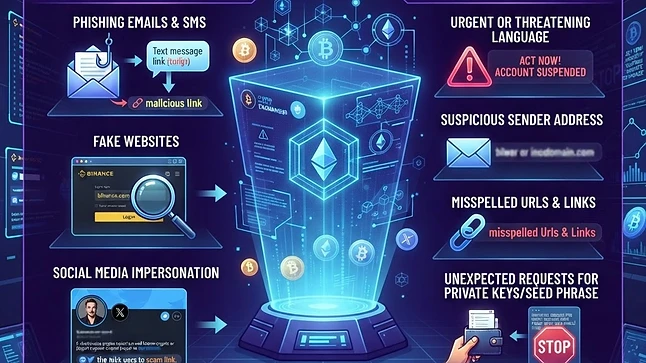
Phishing is one of the most common ways crypto users lose money. Learning to recognize fake websites, messages, and wallet prompts can help you avoid costly mistakes.
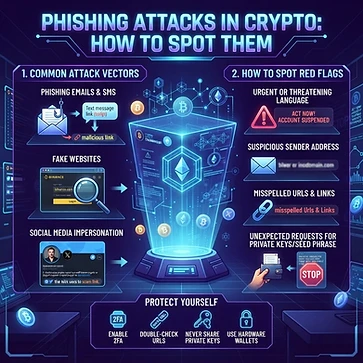
Phishing is when an attacker pretends to be a trusted person, company, or app to steal your password, wallet access, or recovery phrase. In crypto, phishing often works because transactions are fast and irreversible. Once funds are sent, getting them back is very unlikely.
What phishing looks like in crypto
Phishing attacks can appear in many forms:
- Fake exchange or wallet websites
- Emails asking you to “verify” your account
- Social media accounts copying real projects
- Direct messages promising giveaways or support
- Fake browser pop-ups asking you to reconnect your wallet
The goal is usually to make you reveal information or approve a harmful transaction.
Warning signs to watch for
Most phishing attempts share a few red flags.
- The message creates urgency: “Act now” or “Your account is at risk”
- The link looks slightly wrong or misspelled
- The sender asks for your seed phrase or private key
- The offer sounds too good to be true
- The message arrives unexpectedly
Remember: no legitimate wallet or exchange support team needs your seed phrase.
How to verify before you click
A few seconds of checking can prevent a major loss.
- Type important URLs manually instead of clicking links
- Use bookmarks for exchanges and wallets you trust
- Check official project accounts and documentation
- Inspect the full website domain carefully
- Verify support contacts through official channels
If anything feels rushed or unclear, stop and confirm before proceeding.
Protect your wallet from phishing damage
Even if you see a fake site, your security setup matters.
- Use a separate wallet for testing new apps
- Keep large holdings in a wallet you rarely connect
- Review all wallet permissions and transaction prompts
- Revoke old approvals you no longer need
- Enable two-factor authentication where available
What to do if you think you were phished
Act quickly.
- Move remaining funds to a new secure wallet
- Revoke token approvals if possible
- Change exchange passwords immediately
- Enable or update 2FA
- Report the phishing page or account
Phishing attacks succeed by creating panic, excitement, or trust. The best defense is to slow down. If a message asks you to click fast, sign something you do not understand, or share a secret, treat it as suspicious until proven safe.
Comments (0)
Be the first to comment.