
Token Standards: ERC-20 vs ERC-721 vs ERC-1155
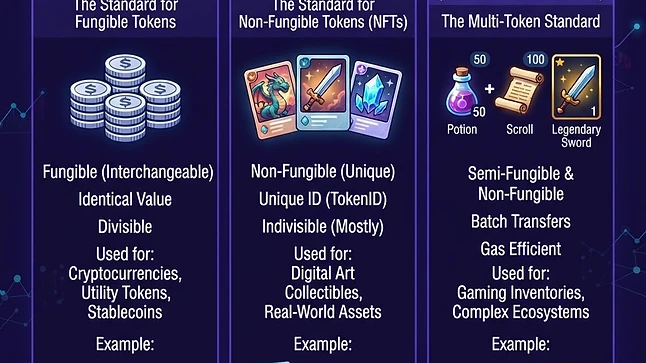
Token standards define common rules for how digital assets work on a blockchain. ERC-20, ERC-721, and ERC-1155 are popular Ethereum standards, and understanding the differences helps beginners make sense of fungible tokens, NFTs, and hybrid asset systems.
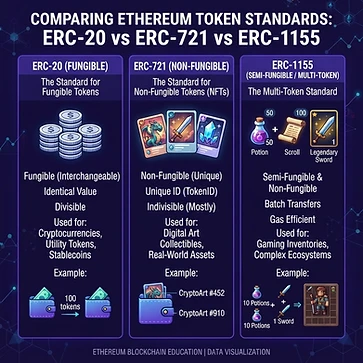
On Ethereum and similar networks, developers often use token standards to create digital assets that wallets, marketplaces, and apps can recognize easily. A token standard is a shared set of rules that defines how a token behaves.
Three of the most important standards are ERC-20, ERC-721, and ERC-1155.
ERC-20: fungible tokens
ERC-20 is the standard for fungible tokens, meaning each unit is interchangeable with any other unit.
Examples include:
- Utility tokens
- Governance tokens
- Stablecoins
If you have 1 token and I have 1 token of the same ERC-20 asset, they are equal in value and function.
Common uses:
- Payments
- Voting in DAOs
- DeFi trading and lending
ERC-721: non-fungible tokens
ERC-721 is the standard for non-fungible tokens, or NFTs. Each token is unique and can represent a distinct digital item.
Examples include:
- Digital art
- Collectibles
- Domain names
- Unique in-game items
Unlike ERC-20 tokens, one ERC-721 token is not identical to another.
ERC-1155: multi-token standard
ERC-1155 is more flexible. It allows a single smart contract to manage:
- Fungible tokens
- Non-fungible tokens
- Semi-fungible tokens
This makes it popular in gaming and digital asset systems where many item types exist together.
Benefits of ERC-1155 include:
- Greater efficiency
- Batch transfers
- Fewer contracts needed
- Better support for mixed asset collections
Quick comparison
- ERC-20
- Fungible
- Best for currencies and utility tokens
- ERC-721
- Non-fungible
- Best for unique assets
- ERC-1155
- Multi-token
- Best for systems with mixed asset types
A simple analogy
Think of them like this:
- ERC-20 = identical coins
- ERC-721 = one-of-a-kind collectibles
- ERC-1155 = a box that can hold coins, collectibles, and game items together
Why standards matter
Token standards make the ecosystem easier to build and use because:
- Wallets know how to display assets
- Marketplaces know how to trade them
- Developers can build compatible apps faster
- Users get more predictable experiences
Key takeaway
If you are new to crypto, the easiest way to remember these standards is by asset type:
- ERC-20 for interchangeable tokens
- ERC-721 for unique tokens
- ERC-1155 for flexible mixed systems
Understanding these basics will make it much easier to navigate DeFi, NFTs, gaming, and other parts of the blockchain ecosystem.
Comments (0)
Be the first to comment.