
Layer 1 vs Layer 2: What's the Difference?
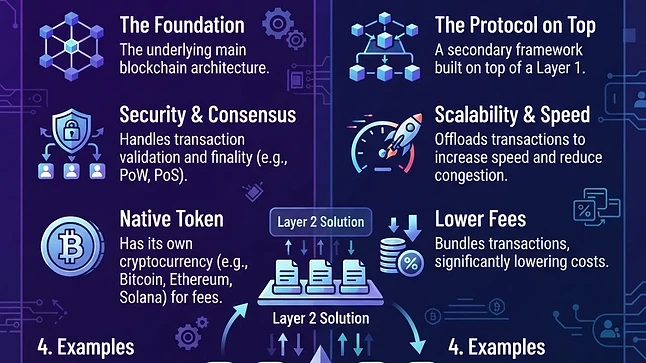
Layer 1 and Layer 2 are two terms beginners often see when learning about blockchain scaling. Layer 1 refers to the base blockchain itself, while Layer 2 refers to systems built on top of it to improve speed, lower fees, or increase capacity.
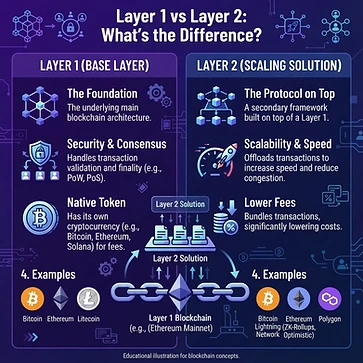
As blockchains become more popular, they often face the same problem: too many users trying to use the network at once. This can lead to slow transactions and high fees. That is where the idea of Layer 1 and Layer 2 comes in.
What is Layer 1?
Layer 1 is the base blockchain network itself. It includes the core rules, consensus mechanism, and transaction history.
Examples of Layer 1 networks include:
- Bitcoin
- Ethereum
- Solana
- Avalanche
When people talk about improving Layer 1, they usually mean changing the main protocol to handle more activity.
Common Layer 1 upgrades include:
- Increasing throughput
- Improving consensus efficiency
- Sharding or similar scaling designs
- Optimizing block creation and validation
What is Layer 2?
Layer 2 refers to systems built on top of a Layer 1 blockchain. These systems process transactions separately and then rely on the main chain for security or final settlement.
Examples of Layer 2 approaches include:
- Rollups
- Payment channels
- State channels
- Side-like scaling systems, depending on architecture
The goal is to take pressure off the main chain.
Why Layer 2 exists
A Layer 1 blockchain often prioritizes:
- Security
- Decentralization
- Reliability
But improving speed and lowering costs directly on the main chain can be difficult. Layer 2 solutions help by moving much of the activity elsewhere while still connecting back to the base layer.
Main differences
Here is the practical comparison:
- Layer 1
- The main blockchain
- Handles core security and consensus
- Usually more decentralized and foundational
- Layer 2
- Built on top of Layer 1
- Helps scale usage
- Often offers lower fees and faster transactions
A simple analogy
Think of Layer 1 like a major highway. It is secure and important, but traffic can become heavy. Layer 2 is like an express lane or service road that handles extra traffic more efficiently while still connecting to the main road.
What beginners should remember
You do not need to choose one concept over the other. They work together.
- Layer 1 provides the foundation
- Layer 2 improves usability and scale
If a blockchain feels slow or expensive, the answer is often not replacing Layer 1 entirely, but adding smart Layer 2 systems to help it handle more demand.
Comments (0)
Be the first to comment.