
Blockchain Interoperability Explained
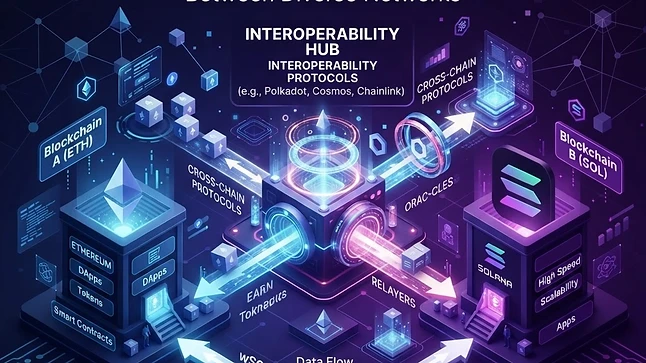
Blockchain interoperability is the ability of different blockchains to communicate and share value or data. It matters because today’s crypto ecosystem is spread across many networks, and users often need better ways to move assets and information between them.

Most blockchains operate like separate islands. Bitcoin, Ethereum, Solana, and other networks each have their own rules, assets, and applications. Blockchain interoperability is the effort to make those separate systems work together more smoothly.
What interoperability means
Interoperability allows different blockchains to:
- Transfer assets between networks
- Share data or messages
- Trigger actions across chains
- Support apps that use multiple ecosystems
Without interoperability, users often face friction. They may need different wallets, extra steps, or trusted third parties just to move value from one chain to another.
Why it matters for beginners
As the crypto world grows, no single blockchain does everything best. One network may be fast, another may be secure, and another may have the most popular apps. Interoperability helps users benefit from multiple chains instead of being locked into only one.
Practical benefits include:
- More flexibility in where assets are used
- Lower costs by choosing efficient networks
- Better access to cross-chain apps and liquidity
- A smoother experience for developers and users
How interoperability is achieved
Several tools help blockchains connect:
- Bridges: move or represent assets across chains
- Cross-chain messaging: lets networks send instructions or data
- Wrapped tokens: tokens that represent assets from another chain
- Interoperability protocols: systems designed specifically for communication between blockchains
For example, a token from one chain may be locked in one place while an equivalent wrapped version is issued on another network.
Risks and limitations
Interoperability is useful, but it also introduces risk.
Common concerns include:
- Bridge hacks due to security weaknesses
- Complexity that users may not fully understand
- Reliance on third parties in some systems
- Fragmentation if standards are inconsistent
This is why cross-chain tools should be used carefully, especially by beginners.
A simple analogy
Think of blockchains like countries with different currencies and languages. Interoperability tools act like exchange services, translators, and shipping routes that allow these countries to trade with each other.
Key takeaway
Blockchain interoperability is about connecting networks so value and information can move more freely. For beginners, the main lesson is simple: crypto is no longer one-chain-at-a-time. The future likely involves many blockchains working together, and interoperability is the technology that makes that possible.
Comments (0)
Be the first to comment.