
Understanding Smart Contracts
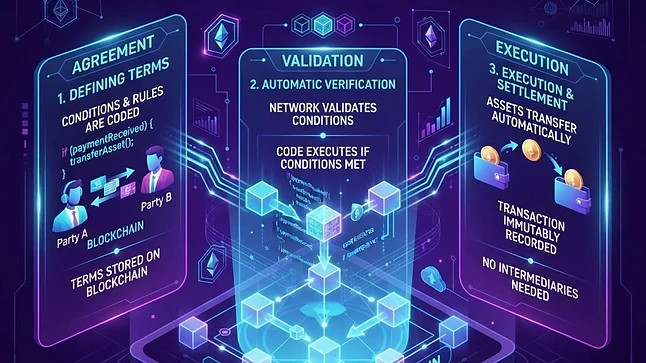
Smart contracts are programs stored on a blockchain that automatically run when certain conditions are met. They are a core building block of decentralized apps because they can move funds, enforce rules, and reduce the need for middlemen.
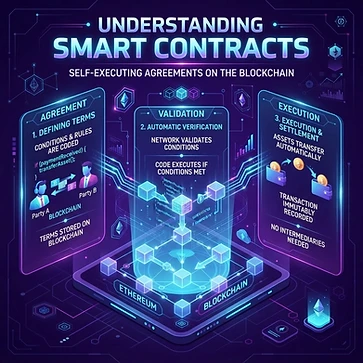
Smart contracts are self-executing programs that live on a blockchain. They follow rules written in code and automatically perform actions when specific conditions are met. In simple terms, a smart contract is like a digital agreement that runs itself.
What smart contracts do
A smart contract can:
- Receive and store digital assets
- Check whether certain conditions are true
- Send assets to another user
- Record outcomes permanently on-chain
- Support apps such as lending, trading, and gaming
For example, a smart contract could release payment only after a delivery is confirmed, or allow users to swap tokens without a bank or broker.
Why they are called "smart"
The word "smart" can be misleading. These contracts are not intelligent in the human sense. They do not think, interpret intent, or adapt automatically. They simply execute the exact instructions written by developers.
That makes them:
- Predictable: same input, same outcome
- Transparent: code can often be reviewed publicly
- Automatic: execution happens without manual approval
- Trust-minimized: users rely more on code than on an intermediary
A practical example
Imagine a crowdfunding contract:
- People contribute funds before a deadline
- If the goal is reached, the creator receives the funds
- If the goal is not reached, contributors can get refunds
No platform operator needs to manually decide what happens. The rules are built into the contract.
Benefits for beginners to understand
Smart contracts help make blockchain useful beyond payments. They power:
- DeFi apps for borrowing, lending, and trading
- NFT marketplaces
- DAOs for on-chain governance
- Blockchain games and digital ownership systems
Risks and limitations
Smart contracts are powerful, but not perfect.
Important risks include:
- Bugs in code can cause loss of funds
- Irreversible actions are hard to undo once deployed
- High network fees may make use expensive
- External data problems require oracles, which add complexity
This is why audits and careful testing matter.
Key takeaway
A smart contract is best understood as a blockchain-based program that automatically enforces rules. If blockchain is the shared database, smart contracts are the logic that makes the database useful.
For beginners, the most important idea is this: smart contracts let strangers interact online using code they can verify, rather than promises they must blindly trust.
Comments (0)
Be the first to comment.