
Institutional Adoption of Cryptocurrency
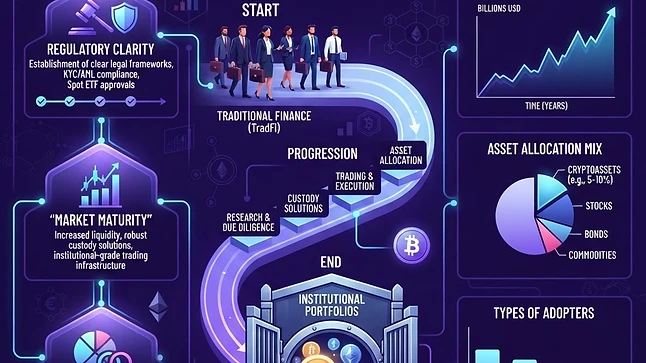
Institutional adoption has become one of the biggest drivers of crypto market maturity. This post explains what institutional adoption means, why it matters, and what signals beginners should watch as large investors enter the space.
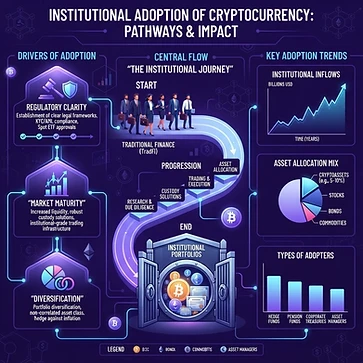
What institutional adoption means
Institutional adoption refers to participation by large organizations such as:
- asset managers
- hedge funds
- banks
- public companies
- pension-related entities
- payment providers
These players may buy crypto directly, offer crypto products, build blockchain infrastructure, or use tokenized assets in financial systems.
Why institutions are entering crypto
Institutions are usually interested for practical reasons, not just hype.
Common motivations include:
- portfolio diversification
- client demand
- access through regulated investment products
- stablecoin and payment innovation
- tokenization of traditional assets
- long-term interest in blockchain-based settlement
What institutional adoption changes
When large investors participate, the market often becomes more connected to traditional finance.
This can lead to:
- deeper liquidity
- improved custody and compliance services
- more analyst coverage
- stronger infrastructure standards
- more policy attention from regulators
At the same time, institutional activity can also increase the market's sensitivity to macro trends like interest rates and risk appetite.
Signs of real adoption
Beginners should look for measurable signals, not headlines alone.
Useful signs include:
- growth in regulated crypto funds or ETFs
- rising custody balances at major financial firms
- public company treasury allocations
- bank support for tokenization or digital asset settlement
- institutional use of stablecoins and blockchain rails
What institutional adoption does not guarantee
It is easy to assume that institutional involvement automatically means prices will keep rising. That is too simplistic.
Institutional adoption does not guarantee:
- constant bullish momentum
- lower volatility in every market phase
- equal demand for every crypto asset
Many institutions focus mainly on Bitcoin, Ethereum, stablecoins, or infrastructure rather than smaller speculative tokens.
Risks and limitations
Institutional participation still depends on:
- regulatory clarity
- custody quality
- internal risk controls
- accounting treatment
- market liquidity and transparency
If these conditions weaken, adoption can slow.
The beginner takeaway
Institutional adoption matters because it helps turn crypto from a niche market into part of the broader financial system. It can improve access, trust, and infrastructure, but it also brings new market dynamics.
For beginners, the key is to watch where institutions are actually deploying capital and building products. That tells you far more than headlines alone.
Comments (0)
Be the first to comment.