
Crypto Regulation Around the World
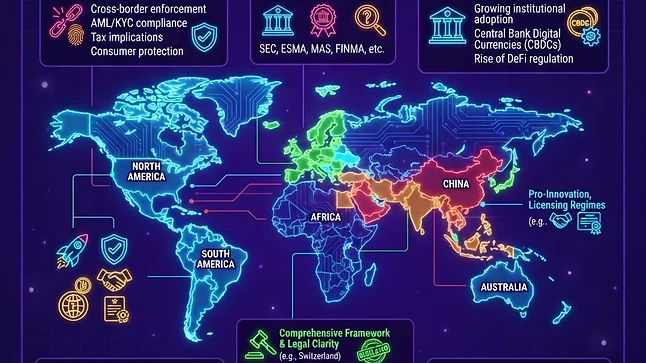
Crypto regulation is developing at different speeds across countries, which can make the global landscape feel confusing for beginners. This post explains the main regulatory themes, how major regions are approaching crypto, and what users should pay attention to.
Why regulation matters in crypto
Regulation affects how people buy, sell, store, and use digital assets. It can shape exchange access, tax rules, stablecoin usage, and which products institutions are allowed to offer.
For beginners, regulation matters because it influences:
- platform safety standards
- identity verification requirements
- product availability
- consumer protection
- reporting and taxes
The big global patterns
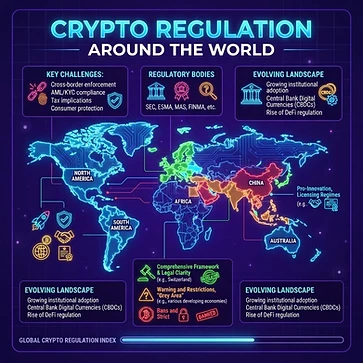
Even though countries differ, many are focusing on the same issues:
- anti-money laundering and KYC rules
- licensing for exchanges and custodians
- stablecoin reserve requirements
- securities classification questions
- tax reporting and disclosures
How major regions are approaching crypto
United States
The US has often taken a fragmented approach, with multiple agencies involved. Key debates have centered on whether certain tokens are securities, how exchanges should register, and how stablecoins should be supervised.
European Union
The EU has moved toward a more unified framework through region-wide rules. This has helped create clearer requirements for some crypto service providers and stablecoin issuers.
United Kingdom
The UK has focused on financial promotion rules, registration standards, and building a framework for digital asset oversight.
Asia and the Middle East
Several jurisdictions, including places such as Singapore, Hong Kong, Japan, and the UAE, have developed licensing paths aimed at balancing innovation and investor protection. Approaches still vary widely.
Emerging markets
In many emerging economies, crypto policy is often shaped by inflation, capital controls, remittances, and access to global finance.
What regulation can change for users
Depending on where you live, regulation may affect:
- which exchanges can serve you
- whether staking products are available
- how stablecoins are treated
- how capital gains are taxed
- what disclosures platforms must provide
A practical checklist for beginners
- use licensed or reputable platforms when possible
- keep records of trades and transfers
- learn your local tax obligations
- verify whether a token or product is restricted in your region
- follow official notices rather than social media rumors
The beginner takeaway
Crypto regulation is not one global rulebook. It is a patchwork of national policies that continues to evolve.
For users, the smartest strategy is simple: understand your local rules, prioritize compliant platforms, and assume that regulation will keep changing as crypto becomes a more established part of finance.
Comments (0)
Be the first to comment.