
Layer 2 Solutions: A Comparative Analysis
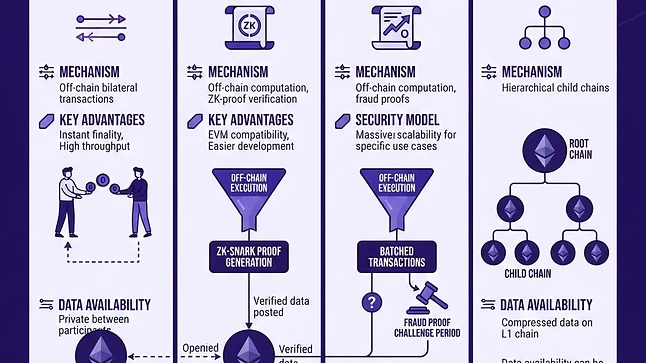
Layer 2 networks aim to make blockchain transactions faster and cheaper without giving up too much security. This beginner-friendly comparison explains how Layer 2s work, the main types, and what to look for when comparing them.
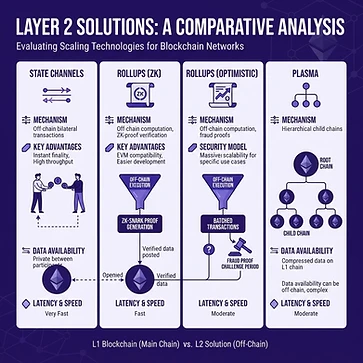
Why Layer 2 exists
Popular blockchains can become expensive and slow when too many users compete for space. Layer 2 solutions are built on top of a base blockchain, usually to improve speed, reduce fees, and increase capacity.
For beginners, the main idea is simple:
- Layer 1 is the main blockchain
- Layer 2 helps process activity more efficiently while relying on Layer 1 for security in some form
The two main Layer 2 models
Optimistic rollups
These assume transactions are valid by default and use challenge periods to detect fraud.
Common strengths:
- strong compatibility with Ethereum apps
- relatively mature ecosystems
- lower fees than Ethereum mainnet
Trade-offs:
- withdrawals to mainnet can take longer
- final settlement may be delayed
ZK rollups
These use cryptographic proofs to show that transactions are valid.
Common strengths:
- potentially faster finality
- efficient security model
- often very strong scaling potential
Trade-offs:
- technology can be more complex
- some ecosystems are still earlier in development
What to compare between Layer 2 networks
When evaluating Layer 2s, beginners should look beyond marketing.
Important comparison points include:
- transaction fees
- speed and user experience
- security design
- decentralization of sequencers or operators
- total value locked
- number of active apps and users
- bridge quality and liquidity
- compatibility with existing wallets and tools
Why one Layer 2 may fit better than another
Different networks may be stronger for different use cases:
- DeFi traders may care most about liquidity and app availability
- gamers may prefer low fees and fast transactions
- developers may want better tooling or easier smart contract compatibility
- long-term users may prioritize decentralization and security roadmaps
Risks to remember
Layer 2s improve usability, but they still carry risk.
Key risks include:
- bridge vulnerabilities
- centralization in early-stage infrastructure
- smart contract bugs
- fragmented liquidity across many chains
A practical beginner framework
Before choosing a Layer 2, ask:
- Is it easy to move funds in and out?
- Are the apps I want already there?
- How mature is the network?
- What security assumptions am I accepting?
The beginner takeaway
Layer 2s are one of the clearest examples of crypto becoming more usable. They help blockchains scale, but each network makes different trade-offs.
The best Layer 2 is not always the fastest or cheapest. It is the one whose security, liquidity, and app ecosystem match your needs.
Comments (0)
Be the first to comment.