
The Stablecoin Market: A Comprehensive Overview
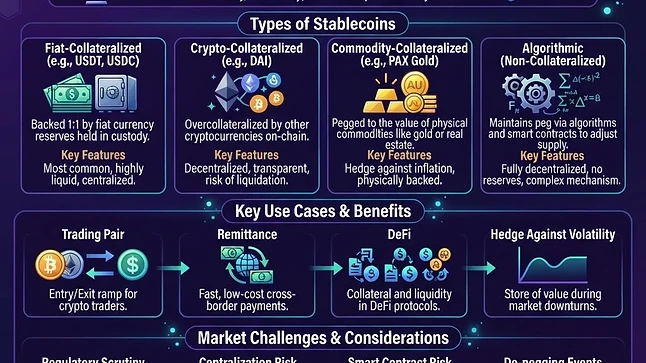
Stablecoins are one of the most practical parts of crypto because they are designed to maintain a steady value, usually against the US dollar. This overview explains how stablecoins work, the major types, their use cases, and the risks beginners should understand.

Why stablecoins matter
Stablecoins are cryptocurrencies designed to hold a relatively stable price, often around $1. They are widely used because they combine blockchain speed with lower volatility than assets like Bitcoin or Ethereum.
In practice, stablecoins are important for:
- moving funds between exchanges
- storing value during volatile markets
- accessing DeFi applications
- cross-border payments
- on-chain settlement and trading
The main types of stablecoins
Not all stablecoins work the same way.
Fiat-backed stablecoins
These are usually backed by cash or short-term government securities held by an issuer.
Examples often include major dollar-backed coins.
Pros:
- simple concept
- usually easiest for beginners to understand
- widely accepted across exchanges and apps
Risks:
- reliance on issuer transparency
- banking and regulatory exposure
Crypto-backed stablecoins
These are backed by other cryptocurrencies, often with extra collateral to absorb volatility.
Pros:
- more on-chain transparency in some cases
- less reliance on traditional banks
Risks:
- collateral can fall sharply in value
- systems can become complex
Algorithmic stablecoins
These try to maintain their peg using code, incentives, or supply adjustments rather than traditional reserves.
Pros:
- innovative design
Risks:
- historically much higher failure risk
- peg stability can break quickly under stress
What beginners should look at
Before using any stablecoin, check:
- reserve disclosures and audit reports
- redemption process
- regulatory standing of the issuer
- blockchain networks supported
- liquidity on major exchanges
- history of depegging events
Why the stablecoin market keeps growing
Stablecoins solve real problems. They make crypto markets easier to navigate and can provide faster settlement than traditional payment rails.
They also play a major role in:
- DeFi lending
- decentralized exchanges
- remittances
- tokenized asset markets
- treasury management for crypto businesses
Key risks to remember
Stable does not mean risk-free.
Major risks include:
- counterparty risk
- reserve quality concerns
- regulatory changes
- smart contract vulnerabilities
- liquidity stress during market panic
The beginner takeaway
Stablecoins are one of the most useful tools in crypto, but understanding the backing model is essential. If you are a beginner, start with the question: what keeps this coin stable, and can I verify it?
The stronger the answer, the safer and more useful that stablecoin is likely to be.
Comments (0)
Be the first to comment.