
DeFi TVL Trends: What the Data Shows
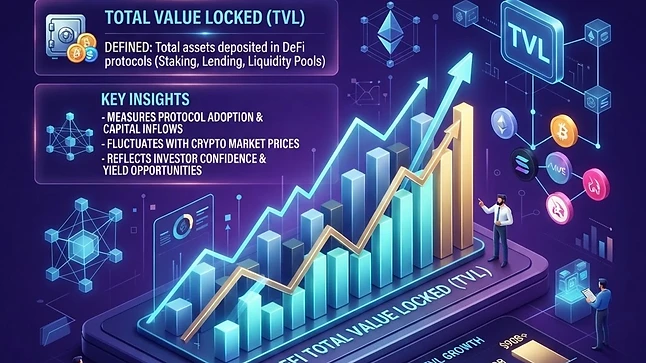
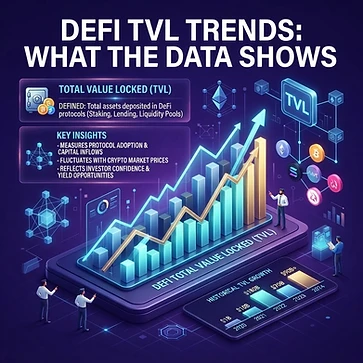
TVL, or total value locked, is one of the most watched metrics in decentralized finance because it shows how much capital is being used across protocols. This post explains what TVL really measures, what recent trends suggest, and how beginners should interpret the data carefully.
What TVL means in DeFi
TVL stands for total value locked. It measures the value of crypto assets deposited into DeFi protocols such as lending platforms, decentralized exchanges, and staking systems.
People watch TVL because it can signal:
- user trust in a protocol
- ecosystem growth
- liquidity available for trading or borrowing
- capital moving between chains and sectors
Why TVL became so important
In DeFi, assets are often locked into smart contracts to earn yield, provide liquidity, or secure a network. The more value deposited, the more a protocol can appear to matter within the market.
For beginners, TVL is useful because it gives a quick snapshot of where on-chain activity is concentrated.
Key trends the data has shown
Across recent market cycles, several TVL patterns have stood out:
- Ethereum remains central: many of the largest DeFi protocols still rely on Ethereum's security and liquidity
- Layer 2 growth has accelerated: cheaper transactions have helped push activity to chains like Arbitrum and Optimism
- Liquid staking became a major category: users increasingly want yield while keeping assets usable in DeFi
- Cross-chain liquidity matters more: capital now moves more fluidly between ecosystems
- Stablecoins are critical: TVL often grows when stablecoin liquidity expands
What TVL does not tell you
TVL is useful, but it is not perfect.
It can be distorted by:
- rising token prices rather than new users
- the same capital being counted across multiple protocols
- temporary incentives that attract short-term deposits
- low-quality yield farming activity
A protocol with high TVL is not automatically safe, profitable, or sustainable.
Better ways to read TVL
Use TVL alongside other metrics, such as:
- daily active users
- fees generated
- protocol revenue
- trading volume
- security audits and exploit history
- stablecoin inflows and outflows
You can also compare TVL to market cap to see whether a protocol looks heavily valued relative to the capital actually using it.
A practical beginner checklist
When reviewing a DeFi protocol, ask:
- Is TVL rising because of adoption or token price appreciation?
- Are users staying after incentives end?
- Is liquidity deep enough for real usage?
- Has the protocol been tested over time?
The beginner takeaway
TVL is one of the most helpful DeFi metrics, but it should never be used alone. Think of it as a starting point: it tells you where capital is sitting, not whether a protocol is fundamentally strong.
The best analysis comes from combining TVL with usage, revenue, and risk data.
Comments (0)
Be the first to comment.