
Ethereum vs Bitcoin: Key Differences Explained

Bitcoin and Ethereum are the two biggest names in crypto, but they were built for different goals. This guide breaks down their main differences in simple language so beginners can understand how each network is used.
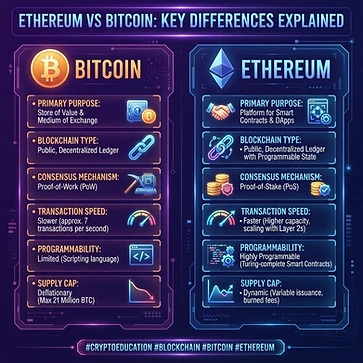
Two networks, two main purposes
Bitcoin and Ethereum are often mentioned together, but they are not the same type of asset.
At a high level:
- Bitcoin was built mainly as a decentralized form of money and a store of value
- Ethereum was built as a programmable blockchain for apps, tokens, and smart contracts
That difference shapes everything else.
Bitcoin: simple, scarce, and focused
Bitcoin's main value proposition is scarcity and security. Its supply is capped at 21 million coins, which is why many investors view it as digital gold.
Key traits of Bitcoin:
- fixed supply model
- strong focus on security and decentralization
- simpler blockchain design
- commonly used for long-term holding and payments
Bitcoin does not aim to run complex applications in the same way Ethereum does.
Ethereum: programmable and flexible
Ethereum allows developers to build smart contracts, which are self-executing programs on the blockchain. This makes Ethereum the foundation for many crypto sectors, including:
- DeFi applications
- NFTs
- stablecoins
- blockchain games
- tokenized real-world assets
Ether, or ETH, is the native asset used to pay network fees and participate in parts of the ecosystem.
Key differences beginners should know
Supply model
- Bitcoin: capped at 21 million
- Ethereum: no hard cap in the same way, though supply growth has changed over time and fee burning can reduce net issuance
Consensus
- Bitcoin: uses Proof of Work
- Ethereum: uses Proof of Stake
Main use case
- Bitcoin: store of value and monetary asset
- Ethereum: infrastructure for decentralized applications
Fees and activity
- Bitcoin fees usually relate to sending BTC
- Ethereum fees can rise when many apps and users compete for block space
Which one is better?
For beginners, the better question is: better for what?
Bitcoin may appeal more if you want exposure to a scarce, simple asset. Ethereum may appeal more if you want exposure to blockchain innovation and application growth.
A practical comparison checklist
Before buying either asset, ask:
- Am I investing in digital money, application infrastructure, or both?
- Do I understand the risks of volatility and fees?
- Am I comfortable with long-term holding?
- Do I want exposure to DeFi and on-chain apps?
The beginner takeaway
Bitcoin and Ethereum are both foundational crypto networks, but they solve different problems. Understanding that difference helps you avoid treating all cryptocurrencies as if they work the same way.
Comments (0)
Be the first to comment.