
Bitcoin Halving: What It Means for the Market
Bitcoin halving is one of the most important events in crypto because it reduces the rate of new BTC entering circulation. This post explains how halving works, why traders watch it so closely, and what beginners should realistically expect from the market.
What a halving actually is
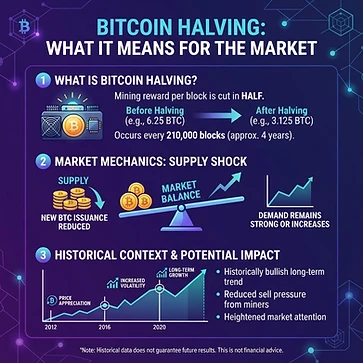
Bitcoin is designed to release new coins at a predictable pace. Roughly every 210,000 blocks, the reward paid to miners is cut in half. This event is called a halving.
In simple terms, halving means:
- fewer new BTC are created each day
- miners earn less BTC per block
- Bitcoin's inflation rate falls over time
- scarcity becomes a bigger part of the investment story
This schedule is built into Bitcoin's code, so it is not controlled by a company or government.
Why the market cares
Many investors see halving as important because supply growth slows while demand can stay the same or rise. In basic economics, lower new supply can support higher prices if buyers remain active.
Historically, halvings have often been followed by strong market cycles, but that does not mean price rises are guaranteed. Markets price in expectations early, and macro factors like interest rates, regulation, and ETF flows can matter just as much.
How halving affects miners
Miners are directly impacted because their BTC rewards drop overnight. If Bitcoin's price does not rise enough, some miners may become less profitable.
This can lead to:
- older mining machines being shut down
- increased focus on cheap energy
- consolidation among mining companies
- more attention on transaction fees as a revenue source
For beginners, this matters because miner behavior can influence selling pressure and network economics.
What halving does not mean
A halving is important, but it is not a magic switch.
It does not guarantee:
- immediate price increases
- a repeat of past cycles
- lower volatility
- the same outcome in every macro environment
Bitcoin is now a larger, more widely traded asset than it was in earlier cycles. That means market structure has changed.
A practical way to follow halving cycles
Instead of trying to predict exact prices, track a few simple indicators:
- Bitcoin supply issuance after the halving
- miner reserves and miner selling activity
- ETF or institutional demand
- overall market liquidity
- long-term holder behavior
The beginner takeaway
Halving matters because it makes Bitcoin scarcer over time. That scarcity is one reason many people compare BTC to digital gold.
The smartest approach is to treat halving as one major factor, not the only factor. If you are learning the market, focus less on hype and more on how supply, demand, and investor sentiment work together.
Comments (0)
Be the first to comment.