
Staking Ethereum: A Step-by-Step Guide
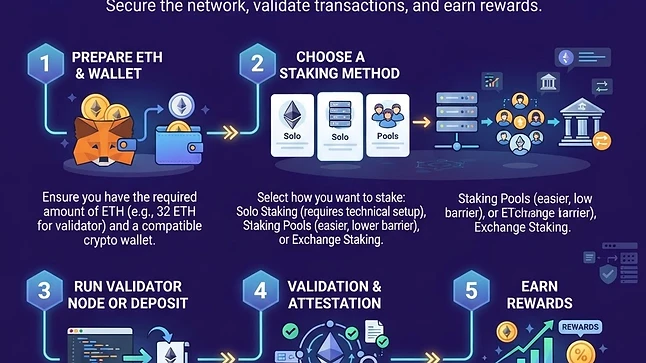
Ethereum staking lets users help secure the network while earning rewards, but the process is not the same for everyone. This guide explains the main staking options, setup steps, and practical risks beginners should understand first.
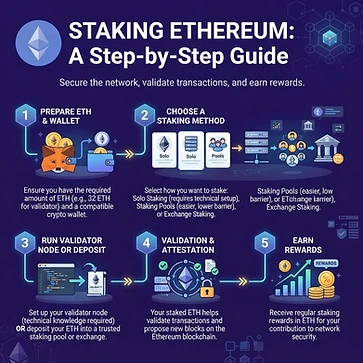
Staking Ethereum allows you to lock ETH to support the network and earn rewards. For beginners, the most important decision is not the button you click, but which staking method fits your budget, risk tolerance, and technical skill.
Know your staking options
There are several ways to stake ETH:
- Solo staking with your own validator
- Staking through an exchange like Coinbase, Kraken, or Binance where available
- Liquid staking through protocols that issue a token representing your staked ETH
- Staking pools that combine funds from multiple users
For most beginners, exchange staking or a reputable staking pool is the simplest path.
What you need before staking
Prepare these basics first:
- ETH in your exchange or wallet
- A secure account or wallet setup
- An understanding that staked ETH may be subject to waiting periods, fees, or protocol risks
- Awareness of local tax rules
Also remember that rewards are not guaranteed at a fixed rate. They can change over time.
Simple method: stake through an exchange
A beginner-friendly process usually looks like this:
- Create and verify your exchange account
- Deposit or buy ETH
- Go to the Earn or Staking section
- Select Ethereum staking
- Read the terms, fees, and any lockup or unstaking conditions
- Choose the amount to stake
- Confirm the transaction
Afterward, your dashboard may show:
- Amount staked
- Estimated reward rate
- Reward history
- Unstaking status, if supported
Using liquid staking protocols
Some users prefer liquid staking because it may provide a tokenized version of staked ETH that can be used in DeFi.
Before using liquid staking, understand:
- Smart contract risk
- Token price deviation from ETH
- Platform fees
- Extra complexity compared with exchange staking
Beginners should research carefully before using these tools.
Risks to understand
Staking is not risk-free. Key risks include:
- Platform or smart contract failure
- Changes in reward rates
- Temporary inability to withdraw immediately
- Slashing risk in some validator setups
- Market risk if ETH price falls
Best practices
If you are new, consider these habits:
- Start with a small amount
- Use a platform with a strong reputation
- Read the unstaking rules before committing
- Track rewards and fees over time
- Keep security tight with 2FA or a hardware wallet
Ethereum staking can be a useful way to learn how blockchain networks work while putting idle ETH to use. Just make sure you understand the method, the fees, and the risks before you begin.
Comments (0)
Be the first to comment.